
Denver County Arrest Records and Court Charges
Denver County arrest records are created on the custody and law-enforcement side. They can identify the person booked, the arrest case number, booking number, facility, arresting or holding agency, AB number, warrant number, court docket reference, charge level, offense code, and offense type. Denver Sheriff's current custody tools are official custody sources, but they describe arrest and booking status. They do not decide guilt and they do not replace the court's charge record.
Formal court charges after arrest are filed by the prosecutor and tracked by the court. The Denver District Attorney is the 2nd Judicial District Attorney for state criminal violations in Denver. Municipal-function charges may also appear in Denver County Court's integrated structure. After filing, the court charge record can show whether a count is pending, amended, reduced, dismissed, or resolved by plea or trial. The full outcome belongs in the Denver County criminal court records file, while custody status belongs with jail and inmate records.
The Denver Sheriff public records page is the official path for custody and law-enforcement records that are not shown in the online lookup.
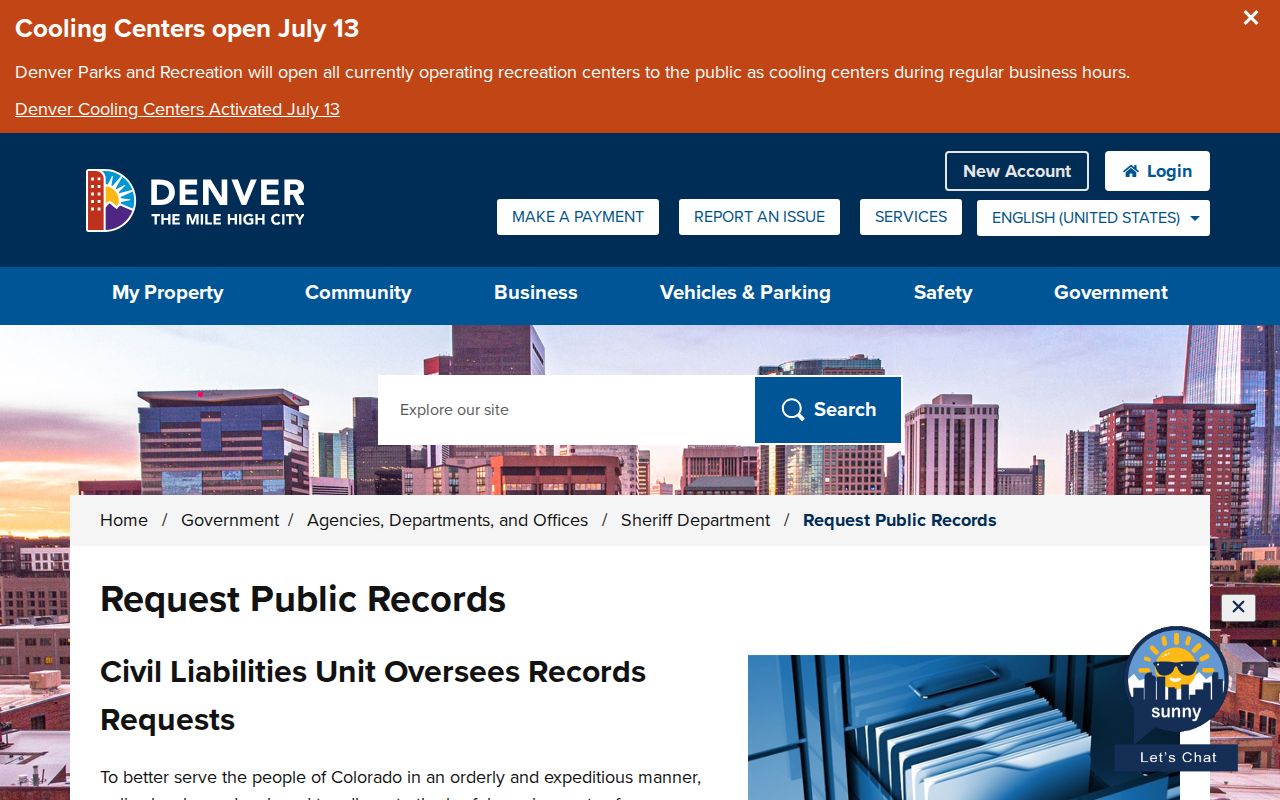
Use a Sheriff records request for custody material, then use the court clerk for filed charges and final case outcomes.
Find Denver Arrest Records
Use more than one official channel when tracing an arrest into court. Current custody starts with the Denver inmate search app and its official booking endpoints. Court charges are checked through the Denver County Court Public Portal when the case is county, municipal, traffic-criminal, bond, or warrant related. Felony and district-level criminal matters move through Colorado Judicial Branch and Denver District Court records. If a record is not online, the fallback is the correct clerk counter or written public-record request.
- Search current custody at Denver inmate search when the person may still be in Denver Sheriff custody.
- Record any AB number, booking number, arrest court docket, warrant number, charge level, or offense code shown in booking detail.
- Use Denver County Court quick case search by case number or AB number for eligible County Court matters.
- For felony court charges, use Colorado Judicial Branch dockets and Denver District Court criminal records contacts.
- Request copies from Denver Sheriff or the court clerk when the online record shows a clue but not the document needed.
Denver County Court's portal has a key limit: public case information can be viewed online with a valid case number, but case documents and person or business name document searches are not provided through the public site. Name-based discovery of registers of actions can involve commercial service contractors, while actual copies remain an official court-counter function. For sentenced state-prison custody, use Colorado Department of Corrections resources rather than the Denver jail search.
The official booking summary endpoint shows the type of arrest and custody fields that can point from a booking record to court charges.
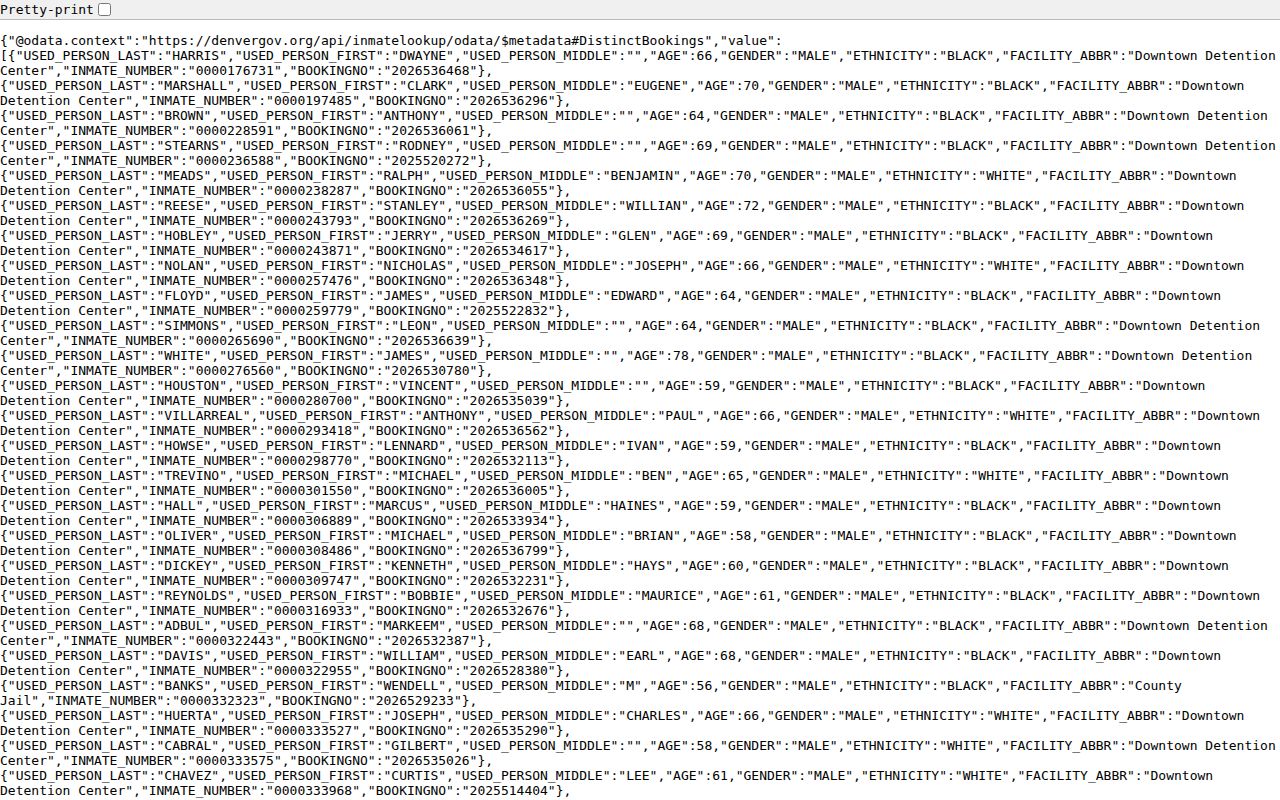
Booking fields are leads for court research, especially when they include an AB number, agency name, or court docket value.
Denver Charges After Arrest
An arrest can happen before a final charging decision. The DA reviews the facts and decides whether state-law charges proceed. Once charges are filed, the charge record begins in court and may be tied to a complaint, information, indictment, or summons-based filing. Denver County Court may handle misdemeanors, municipal criminal matters, traffic-criminal matters, and felony complaints at early stages. Denver District Court handles felony criminal cases after district filing.
| Complaint | Information | Indictment | |
|---|---|---|---|
| Filed by | Officer or prosecutor, depending on the matter. | Prosecutor after review and filing decision. | Grand jury process for qualifying serious matters. |
| Common Denver use | Misdemeanor, municipal, traffic-criminal, or early lower-court criminal filings. | Felony or state prosecution filings handled by the DA. | Less common, used when grand jury charging is pursued. |
| Record value | Shows the first formal accusation and case start. | Shows the prosecutor's filed counts and levels. | Shows grand-jury-filed counts and case initiation. |
The Colorado inmate locator service page is a state custody fallback after a Denver arrest has moved beyond local jail custody.
State custody searches can help after sentencing, but they are not the source for Denver filed-charge documents.
Denver Charge Status Terms
Charge status can change several times. A booking record may show the arresting charge, a complaint may file a different count, and a plea may resolve only one of several counts. Denver court records should be read count by count, with the date and court level in mind. The same person can have a jail hold, an active warrant, a pending count, and a separate closed count at the same time.
| Status | What It Means |
|---|---|
| Pending | The charge is filed and has no final disposition yet. |
| Amended | The filed count changed, often by wording, statute, level, or replacement count. |
| Reduced | The defendant resolves or faces a lesser charge than an earlier filed count. |
| Dismissed | The court or prosecutor removes the count from further prosecution in that case. |
| FTA warrant | A failure-to-appear warrant or hold may appear in booking or court records until addressed. |
Note: A dismissed charge can remain visible in a public court record unless it is later sealed under Colorado law.
Charges vs Convictions
Denver County arrest records and court charge records are often misread because charge text looks final. It is not final by itself. A charge is an accusation. A conviction is a later court result based on a plea, verdict, or judgment. Booking data may show "WARRANT - DENVER HOLD," a court docket, and a charge offense type, but those details identify custody and pending or holding charge information.
| Charge | Conviction | |
|---|---|---|
| Stage | Filed accusation or booking clue before final judgment. | Final result after plea, verdict, or other court disposition. |
| Where found | Booking detail, complaint, information, indictment, docket, or charge list. | Disposition, judgment, sentence, and sometimes DMV or state history reporting. |
| How to verify | Check current status and whether the count was amended or dismissed. | Match the conviction count to the final court disposition and sentence. |
The detailed Denver booking endpoint shows arrest-active flags, case sequence, case type, AB number, court docket, next court date, warrant number, and charge data.
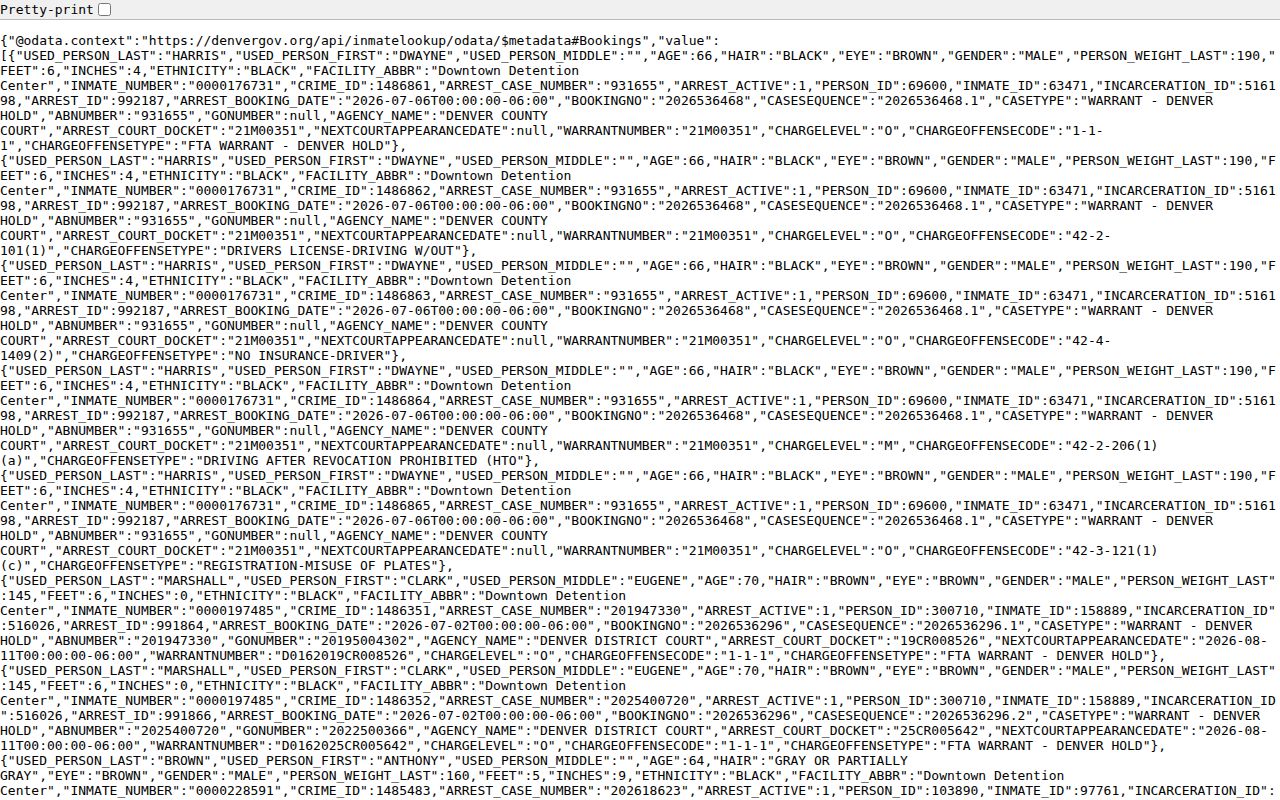
Those fields help identify the correct court record, but the court disposition controls the conviction question.
Sealed vs Expunged Charges
Colorado law separates adult criminal record sealing from juvenile expungement. Adult Denver charges may be eligible for sealing under Colorado Judicial Branch procedures and C.R.S. 24-72-705 or 24-72-706, depending on the outcome and exclusions. Juvenile delinquency records are handled under a different expungement path, including C.R.S. 19-1-306 and JDF 301. Public portal visibility is not a complete legal test.
| Sealed | Expunged | |
|---|---|---|
| Record type | Usually adult criminal justice records that qualify for sealing. | Juvenile delinquency records that qualify under juvenile procedure. |
| Public result | Hidden from ordinary public search after the court grants sealing. | Treated as not publicly existing after the expungement order. |
| Denver action | Use the correct Denver County Court or District Court case number and Judicial Branch forms. | Use Denver Juvenile Court and the juvenile expungement form path. |
Denver Charge Codes
Denver booking and court data can show charge level, offense code, offense type, statute or municipal ordinance, domestic-violence flag, and court docket. Charge level helps separate felony, misdemeanor, municipal, traffic-criminal, and infraction-style matters, but the court and final disposition still matter. Felony criminal cases belong with Denver District Court. Misdemeanors, municipal criminal matters, and many traffic-criminal cases belong with Denver County Court.
A single arrest can produce more than one count, more than one case number, or more than one court setting. If a charge code is unclear, use the case number, AB number, and court docket together. That Denver-specific combination is stronger than searching by name alone because the public County Court portal limits name-based case-document access.
Statewide Criminal Lookups
Statewide systems answer different questions. The Colorado Department of Corrections offender search is for sentenced state-prison custody and supervision data, not Denver jail booking or court filing details. Colorado Judicial Branch dockets help with state-court calendars. Denver County Court remains the local source for its own county and municipal cases. Denver Sheriff remains the source for current custody and many jail records.
The Colorado Department of Corrections offender search appears in the image manifest for this page as the state-custody fallback after a Denver criminal case reaches sentencing or transfer.
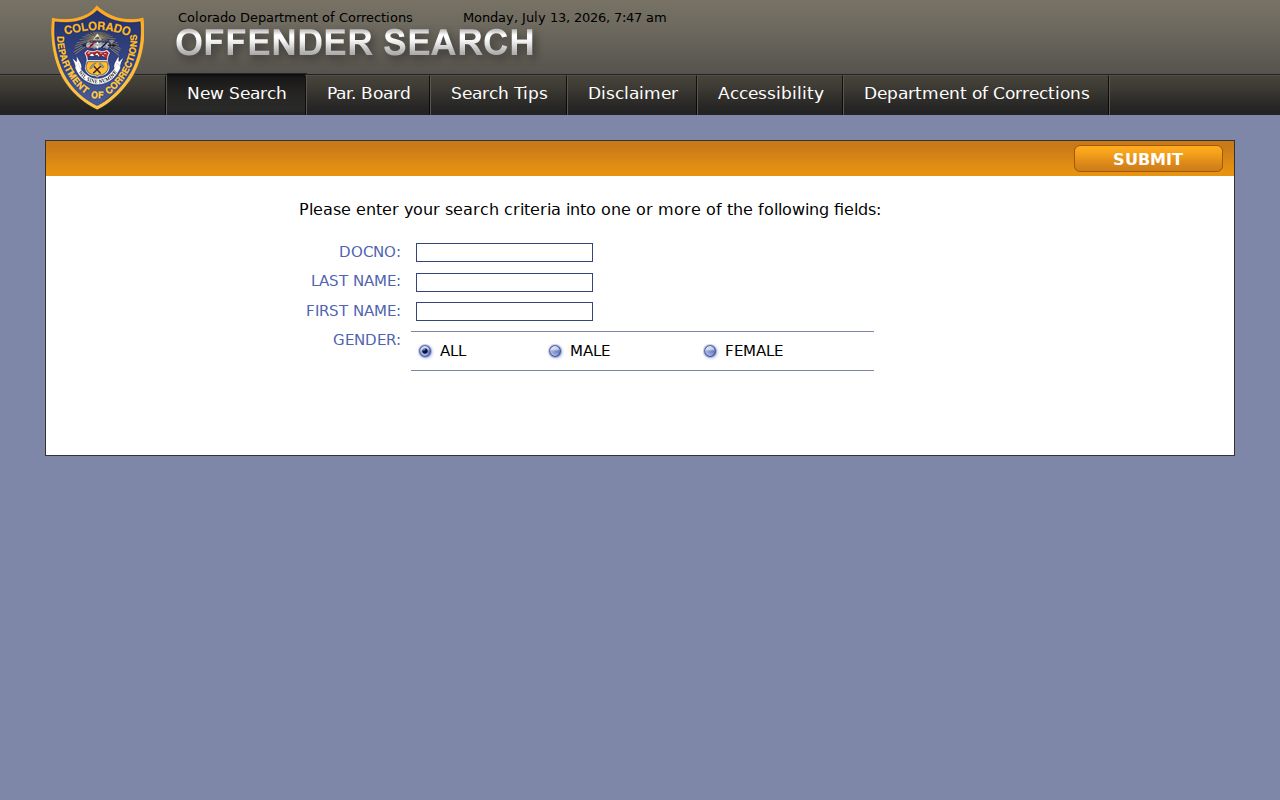
Use state custody results to locate a sentenced person, then use the court case record to read filed charges and outcomes.
Public Access and Limits
Court charges and arrest-related records can be public, restricted, or partly redacted depending on the custodian and record type. CORA, the Colorado Criminal Justice Records Act, Chief Justice Directive 05-01, and court-specific public access rules do not all work the same way. Denver has no single central repository for every public record. Requests must go to the Denver agency or court that maintains the specific record.
Important: Arrest and charge lookups are not consumer reports and should not be used for regulated screening decisions.
Restricted Denver Charge Records
Restricted Denver charge records include juvenile matters, sealed adult records, certain mental-health and competency information, victim data, minor information, financial identifiers, protected addresses, and investigation material not filed in court. A charge that once appeared online may later be sealed. A juvenile charge may be unavailable to the public from the start. A Sheriff's custody record may omit material that a court file later shows, and the reverse can also be true.
When a public Denver arrest record appears to conflict with a court charge record, rely on source order: booking records describe custody, DA records describe prosecution decisions, and court records describe filed charges and outcomes. For copies, use Denver Sheriff public records for custody material, Denver County Court counters for county and municipal court files, and Denver District Court records for felony state cases.