
Denver County Criminal Court Records
A Denver County criminal court record is the case-level file kept by the court after a charge is filed. It is different from a police report, jail roster entry, or arrest booking. The court file is where the formal criminal case is tracked through advisement, arraignment, plea, motions, hearings, disposition, sentence, probation terms, fines, bond orders, and later warrant activity. Denver County Court's public records instructions state that disposition, sentence, and register of actions information are public record when the requester has a valid case number, but public online document downloads are not the normal path.
Jurisdiction matters. Denver County Court handles misdemeanor, municipal criminal, traffic-criminal, bond, warrant, and lower-court criminal functions. Denver District Court, part of Colorado's 2nd Judicial District, handles felony criminal cases and other state criminal proceedings. Juvenile cases move through Denver Juvenile Court and are subject to tighter access limits. The charge itself is only one part of the file; the narrower arrest-to-charge path is covered in the Denver County arrest records and court charges material.
The Denver District Attorney data dashboard is a useful public source for prosecution-level context in the 2nd Judicial District, but it is not a substitute for the court file. The dashboard speaks to case processing and transparency, while the official court record remains with Denver County Court or the Colorado Judicial Branch clerk for the court that opened the case.
The Denver District Attorney dashboard is an official source for prosecution data in the 2nd Judicial District.
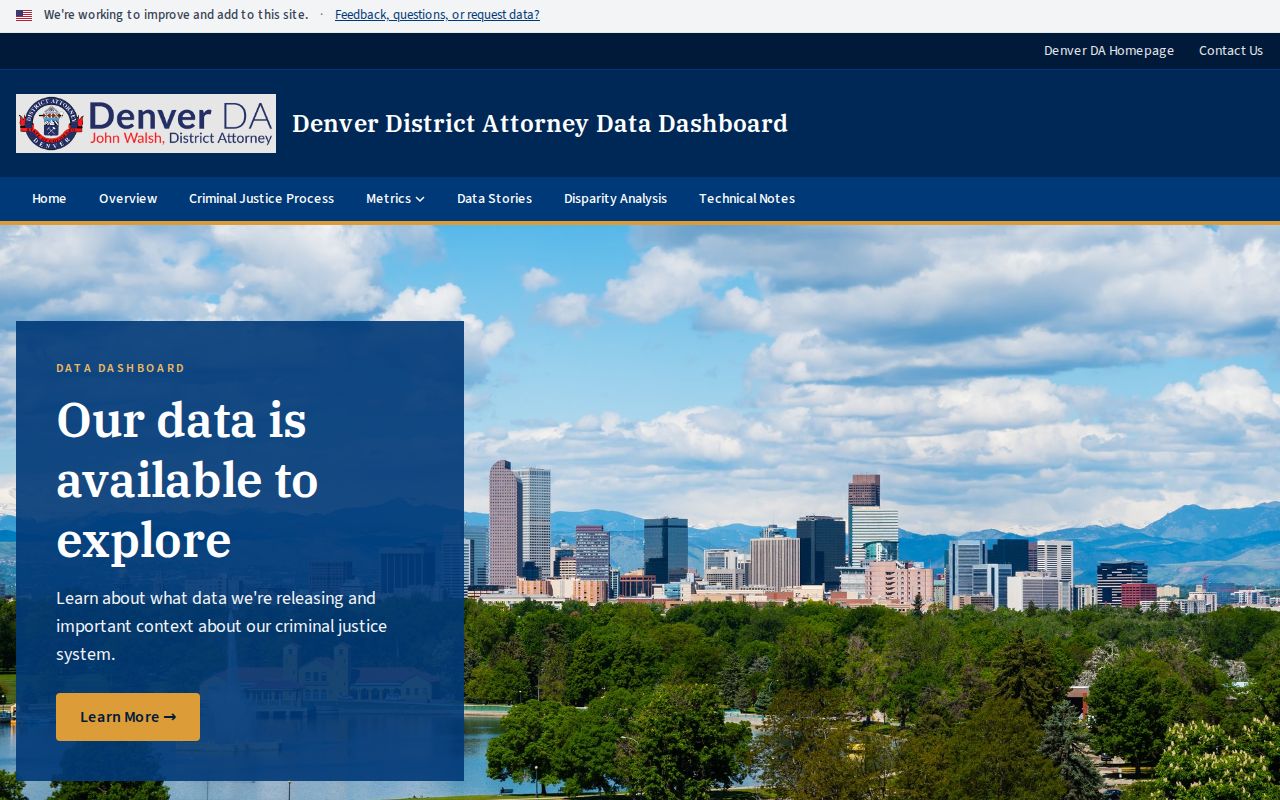
Use prosecution data to understand trends, then use the court or clerk record to confirm a specific defendant's filings and disposition.
Search Denver County Criminal Records
Start with the court that likely holds the criminal record. For Denver County Court misdemeanor, municipal, bond, warrant, and eligible payment matters, use the Denver County Court Public Portal. Its quick case search accepts a case number or AB number, which is the arrest booking number often printed on the Unified Summons and Complaint. The portal also has court-date, docket, payment, and post-bond/address-warrant functions. Its public records page says case documents and person or business name searches are not available through the public site.
- Open the Denver County Court Public Portal if the matter is a county, municipal, misdemeanor, warrant, bond, or payment case.
- Search by case number or AB number when one is available from the summons, booking, docket, or court notice.
- Use the docket tool by courtroom and court date when the goal is a public calendar entry rather than a full file.
- For felony or district-level criminal matters, use Colorado Judicial Branch dockets and the Denver District Court records counter.
- Request copies from the correct clerk counter when the portal does not show the needed document or certified copy.
Denver County Court criminal and municipal copy requests go through the Lindsey-Flanigan Courthouse criminal/municipal clerk in Room 160. Denver District criminal case records are handled through the district criminal court location at the same justice campus. If a person only has a name and no case number, Denver County Court explains that a register of actions with case numbers may be purchased through commercial service contractors, but copies still come from official court counters. That is a local limit of the official public portal, not a sign that the record is gone.
Denver Criminal Case Flow
Criminal court records are easiest to read as a timeline. The case begins with filed charges, not merely with an arrest. Early entries may show advisement, bond, appointment or entry of counsel, arraignment, and future court settings. Later entries may show motions, continuances, plea changes, trial settings, disposition, sentence, probation, costs, and warrant action. Denver's integrated County Court structure means some municipal-function criminal matters stay in County Court, while felony cases move in District Court.
Case flow: Charges Filed › Arraignment › Pretrial / Motions › Plea or Trial › Disposition › Sentencing
| Stage | What Happens |
|---|---|
| Charges filed | The DA or city prosecutor files the complaint, information, or other charging document that opens the court case. |
| Arraignment | The defendant is advised of the charge and enters or prepares for a plea, with bond and counsel issues often noted. |
| Pretrial and motions | The record may show continuances, discovery disputes, competency issues, suppression motions, or specialty court referrals. |
| Plea or trial | The file records whether the defendant pleads, proceeds to trial, has a count dismissed, or receives a verdict. |
| Disposition and sentence | The final outcome and court-ordered terms are recorded, including custody, probation, fines, costs, restitution, or treatment conditions. |
Denver County Court's specialty programs can add local terms that do not look like a simple plea-and-sentence path. Sobriety Court, Recovery Court, and competency diversion may create hearings tied to treatment, monitoring, or competency support. Some mental-health details are not public even when a docket entry confirms that the case had a competency or specialty-court event.
What Denver Criminal Records Show
Denver criminal records combine court fields, charge fields, and event fields. A public docket may show a courtroom setting, defendant name, case type, scheduled hearing time, disposition, domestic-violence flag, counsel, date of birth, and charge columns. A full file or register of actions may add filings, orders, bond terms, sentence terms, payment actions, and copyable documents that are not downloaded from the public portal.
| Field | What It Shows |
|---|---|
| Case number | The court case identifier used for searches, copy requests, dockets, and clerk communication. |
| AB number | The arrest booking number used by Denver County Court and jail systems, often found on summons paperwork. |
| Defendant and counsel | The accused person, attorney of record when shown, and sometimes language or appearance-related details. |
| Charges | Charge code, offense type, level, statute or ordinance, and DV flag when the public docket displays one. |
| Docket activity | Hearings, motions, continuances, orders, warrants, bond actions, and scheduled court dates. |
| Disposition | The outcome of a case or count, such as guilty plea, dismissal, acquittal, deferred result, or other final action. |
| Sentence | Custody, probation, treatment, fines, fees, costs, restitution, payment plan, and other court-ordered terms. |
The Colorado State Public Defender statewide office list is relevant when a Denver criminal record shows appointed counsel or when a defendant needs representation.
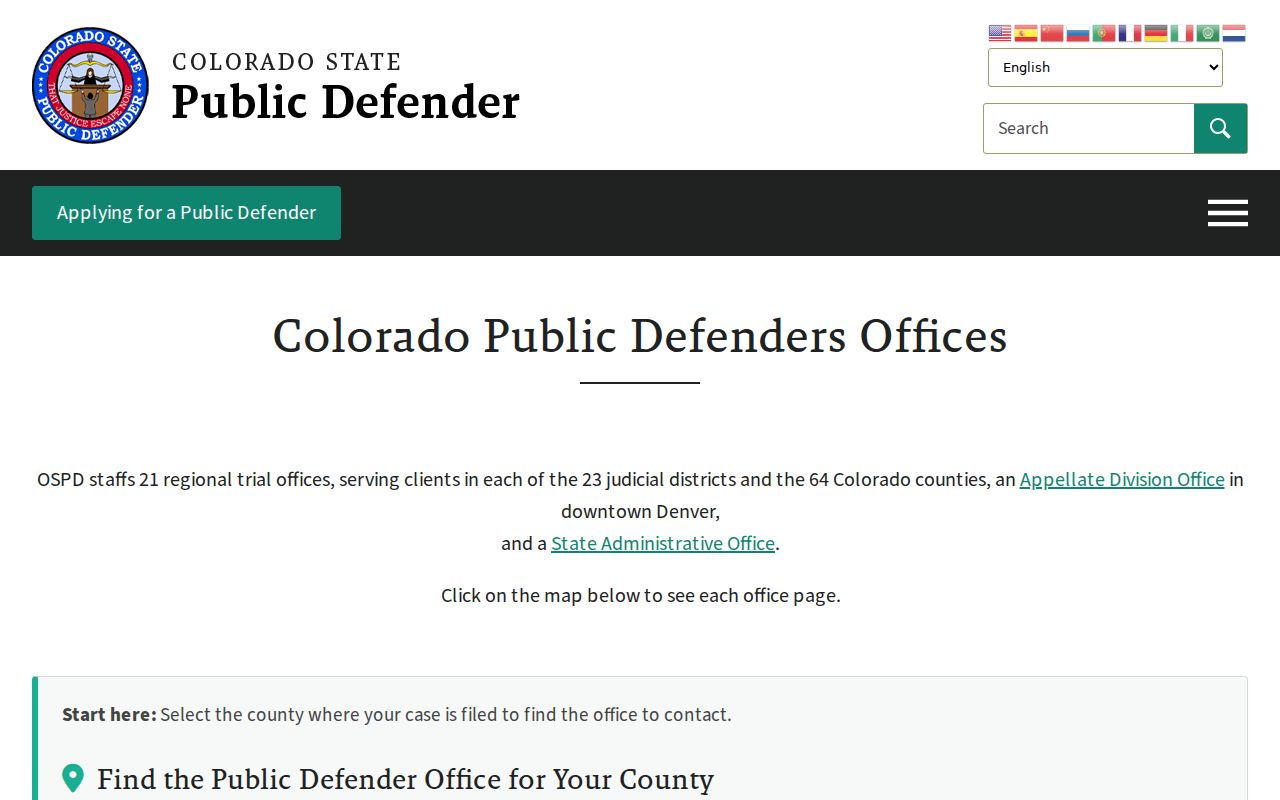
Public defender contact information helps explain who may appear in counsel fields, but it does not replace the clerk's case record.
Charges vs Convictions
A Denver County criminal court record can show charges that never become convictions. One arrest may lead to several counts. Some may be amended, reduced, dismissed, or resolved through a plea to a different count. A charge shows an accusation filed with the court. A conviction shows a final finding or plea that supports judgment and sentence. Read each count on its own line instead of assuming that every listed charge ended the same way.
| Charge | Conviction | |
|---|---|---|
| Meaning | Formal accusation filed after arrest, summons, investigation, or DA review. | Final result based on a guilty plea, verdict, or other judgment. |
| Where it appears | Charging document, docket, jail booking fields, and early court entries. | Disposition, judgment, sentence, and later criminal history reporting. |
| Risk of misread | A listed count may be pending, dismissed, reduced, or amended. | A conviction should match the final disposition and sentence for that count. |
Denver Sheriff booking fields can show charge level, charge offense code, charge offense type, arrest court docket, and warrant number before a final outcome exists. Those booking fields are useful clues, but they do not prove guilt. For final results, use the court record disposition and sentence.
Read Denver Dispositions
A disposition is the court outcome for a case or charge. Denver County Court's records instructions identify dispositions and sentences as public record when a valid case number is supplied. The public docket may show a disposition column, while the register of actions or copy request may be needed for the full sequence that led to that result. Do not treat a next court date as a final disposition. A future setting can mean the case is active, continued, or awaiting another hearing.
Sentence entries should be read with the date and count. A sentence can include jail, probation, treatment, community service, fines, costs, restitution, payment-plan deadlines, or collection action. In traffic-criminal and municipal cases, payment status can matter because Denver County Court's payment terms warn that payment-plan failures may trigger penalties, garnishment, or referral to collection. Note: If an online payment search redirects to a warrant or bond page, address the warrant issue before relying on the payment screen.
Sealed vs Expunged Records
Colorado treats adult sealing and juvenile expungement as separate processes. The Colorado Judicial Branch sealing guide cites C.R.S. 24-72-705 and 24-72-706 for adult criminal justice record sealing. Once sealed, a record should not appear in ordinary public portal results. Juvenile expungement is addressed through C.R.S. 19-1-306 and Judicial Department form material, and expunged juvenile records are treated as if they do not publicly exist.
| Sealed | Expunged | |
|---|---|---|
| Main use | Adult criminal records that qualify under Colorado sealing law. | Juvenile delinquency records that qualify under Colorado juvenile procedure. |
| Public view | Removed from ordinary public access after a signed order. | Treated as not publicly existing after expungement is granted. |
| Denver path | Identify the County Court or District Court case number and use Judicial Branch sealing forms or self-help resources. | Use Denver Juvenile Court and JDF 301 procedures when the matter is juvenile delinquency. |
Denver Criminal Record Access
Colorado public access depends on the custodian. Denver County Court is the custodian for its own county and municipal criminal cases. Colorado Judicial Branch is the custodian for Denver District, Probate, and Juvenile Court records. Denver Sheriff is the custodian for custody and booking records. The Denver District Attorney and public defender offices hold records tied to prosecution or defense work, but public court copies still come from the court clerk when the filing is part of the official case file.
Key access rules:
C.R.S. 24-72-201 states Colorado's general public-record access policy unless a law restricts access.
C.R.S. 24-72-301 to 309 creates a separate access framework for criminal justice records.
Colorado Judicial Branch public access guidance points court users to court-specific access rules, including CJD 05-01 and P.A.I.R.R.
The Denver Public Defender office page gives local contact details for the Colorado State Public Defender in Denver.
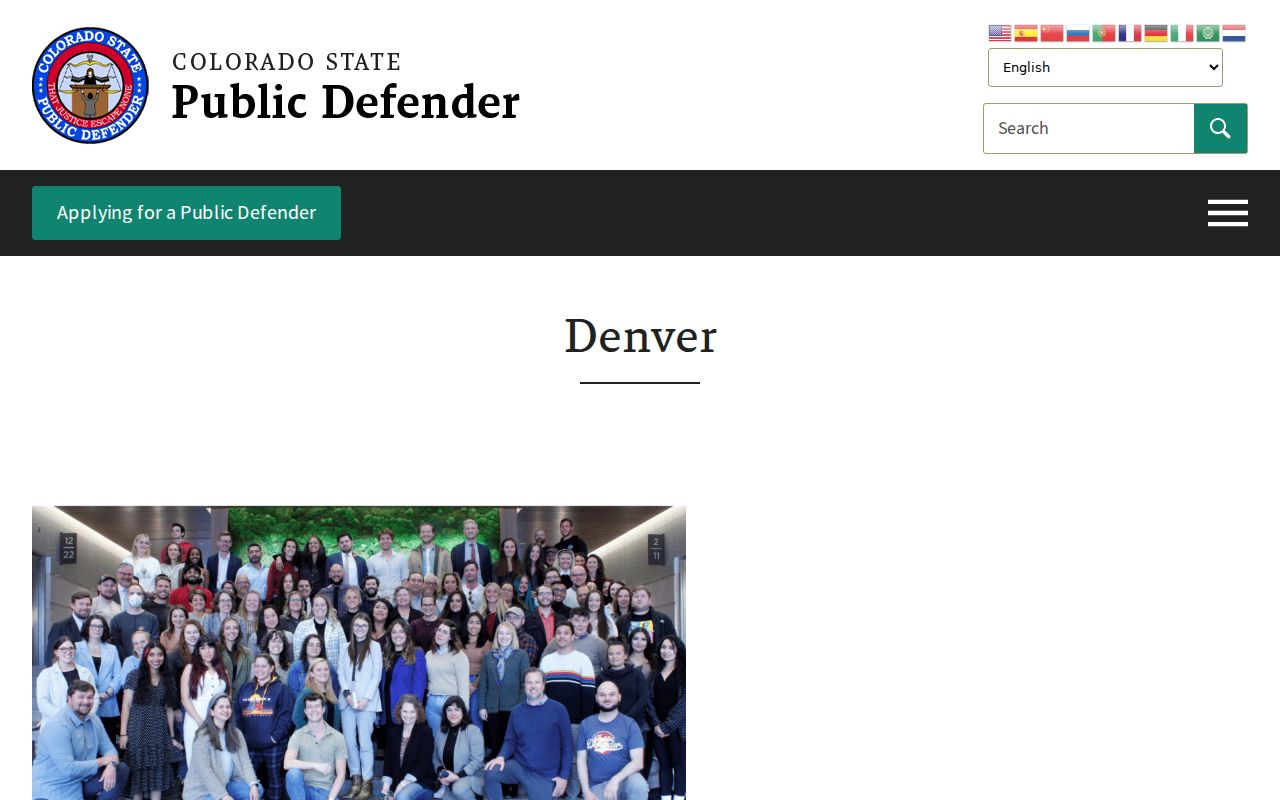
Representation records and discovery are separate from public case access, so the clerk remains the source for court-file copies.
Criminal History Limits
Criminal court records are not the same as a statewide criminal history report. A Denver court file shows activity in that case and court. It may not show cases from other counties, federal court, sealed matters, or records held by law enforcement that never became court filings. Federal criminal cases filed in Denver are in the U.S. District Court for the District of Colorado, not Denver County Court, and federal records use PACER rather than the Denver County Court portal.
Important: Public lookup results should not be used for credit, housing, employment, insurance, or other FCRA-regulated screening decisions.
The U.S. Attorney's Office for the District of Colorado handles federal prosecution contacts for federal cases filed in Denver.
Federal contact information helps route a federal criminal matter, but Denver County criminal records remain in local or state court systems.
Restricted Denver Criminal Records
Not every Denver criminal record is public. Juvenile delinquency records, adoption material, mental-health proceedings, sealed criminal records, victim information, protected addresses, Social Security numbers, financial account numbers, and some minor information can be withheld or redacted. A public docket may confirm that a hearing exists without showing protected filings. Denver Juvenile Court should be treated as confidential unless the court or Colorado law says otherwise.
For an adult sealing request, identify whether the case is in Denver County Court or Denver District Court, gather the case number, and use the Colorado Judicial Branch sealing forms or the Denver District Court Pro Se/Self-Help Center for district matters. For a juvenile expungement request, use Denver Juvenile Court and the juvenile expungement form path. Note: A clean public search result is not proof of sealing, expungement, dismissal, or no criminal history.